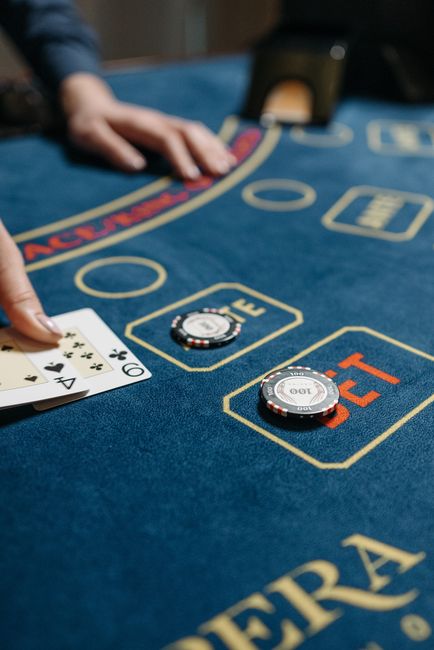


The first time I watched a high-stakes online poker table, I assumed the winners were just luckier. Then I started tracking hand histories and realized something uncomfortable: the players who consistently cashed weren't catching better cards. They were folding more. That single insight changed how I look at every corner of the iGaming world, from slots to sportsbooks to the poker room.
If you're going to spend real money in this space, you owe it to yourself to understand what's actually happening under the hood. Not the marketing version. The math, the mechanics, and the psychology that separates a fun session from a slow bleed. Here's what I've learned after years of playing, reading payout tables, and talking to people who build these games for a living.
Every casino game has a house edge, and it's not a secret. It's published. A standard European roulette wheel has a 2.7% edge. American roulette, with its extra double-zero pocket, jumps to 5.26%. Blackjack played with basic strategy hovers around 0.5%. These numbers aren't marketing fluff; they're the mathematical spine of the entire industry.
What most casual players miss is that the house edge only guarantees profit over millions of hands. In any single session, variance dominates. That's why someone can sit at a blackjack table with a 0.5% disadvantage and walk away up four figures. It's also why a slot player can hit a 5,000x multiplier on their third spin.
The edge doesn't predict your night. It predicts the casino's decade.
Slots are where the gap between what players think they know and reality is widest. Three numbers matter more than the theme, the graphics, or how many scatter symbols the game claims to have.
Here's the practical takeaway. If you have a $100 bankroll and want to play for two hours, high-volatility slots are the wrong tool. You'll bust more often. If you want the shot at a life-changing multiplier and you accept the odds, they're exactly right.
One more thing: RTP is calculated across millions of spins. A 96% RTP game does not owe you 96 cents back on every dollar. It owes the aggregate player base that return. Your individual session could end at 300% or at zero.
Poker is different from every other game in the casino because you're not playing against the house. You're playing against other people, and the house just takes a rake. That single structural fact means a skilled player can achieve a positive expected value, something that's mathematically impossible on slots or roulette. สล็อต offers a practical breakdown of the topic.
But "skilled" is doing a lot of work in that sentence. The modern online poker pool is brutal. Solvers, tracking software, and a generation of players who studied range charts have compressed the edge at mid-stakes to razor-thin margins. A few concrete realities:
If you want to test whether you have a real edge, track every session for three months. Not the results. The decisions. If you can't articulate why you made a specific bet or fold, you're gambling, not playing.
Sportsbooks employ quants and use algorithms that incorporate injury reports, weather, public betting percentages, and historical data. When you see a point spread, that number is the product of a process designed to balance the book and extract a margin, usually 4-6% via the vig.
Beating the closing line consistently is the only reliable indicator of long-term betting skill. If you can routinely get a better number than where the line closes, you have an edge. If you're just picking teams because you like them, you're paying entertainment tax.
Promotions and boosted odds can genuinely shift expected value in your favor. But read the terms. A "$500 risk-free bet" usually comes back as site credit, not cash, and requires rolling it over multiple times before withdrawal. That changes the real value substantially.
Games are engineered to keep you playing. Near-misses on slots where two of three jackpot symbols land are deliberately common. Sounds, animations, and celebration graphics trigger dopamine responses independent of whether you actually won. Poker sites use fast-fold formats to eliminate the natural pause that lets you think about whether you should keep playing.
The countermeasure is boring but effective. Set a loss limit before you log in. Set a time limit. Never chase losses with money you can't afford to lose. If you find yourself hiding your play from people who care about you, that's not a bad night. That's a signal.
The most successful players I know treat this as entertainment with a budget, not as an income strategy. They enjoy the math, the strategy, and the occasional cash. They don't need the win to feel whole.
The iGaming world is genuinely fascinating once you move past the surface. It's probability theory, game design, behavioral psychology, and economics colliding in one product. Knowing how RTP really works, why poker is structurally different, and how sportsbook lines are built gives you something no bonus offer can: informed decisions.
You won't beat the house at slots. You probably won't beat the closing line at sports betting. But you can absolutely avoid being the player the industry designs for, the one who doesn't understand the edge and pays for everyone else's jackpots. That's a real win, and it doesn't depend on variance.

Salsa Perros shares practical, down-to-earth guidance on gourmet hot dogs and latin-inspired salsas for readers across the UK.


Leave A Comment